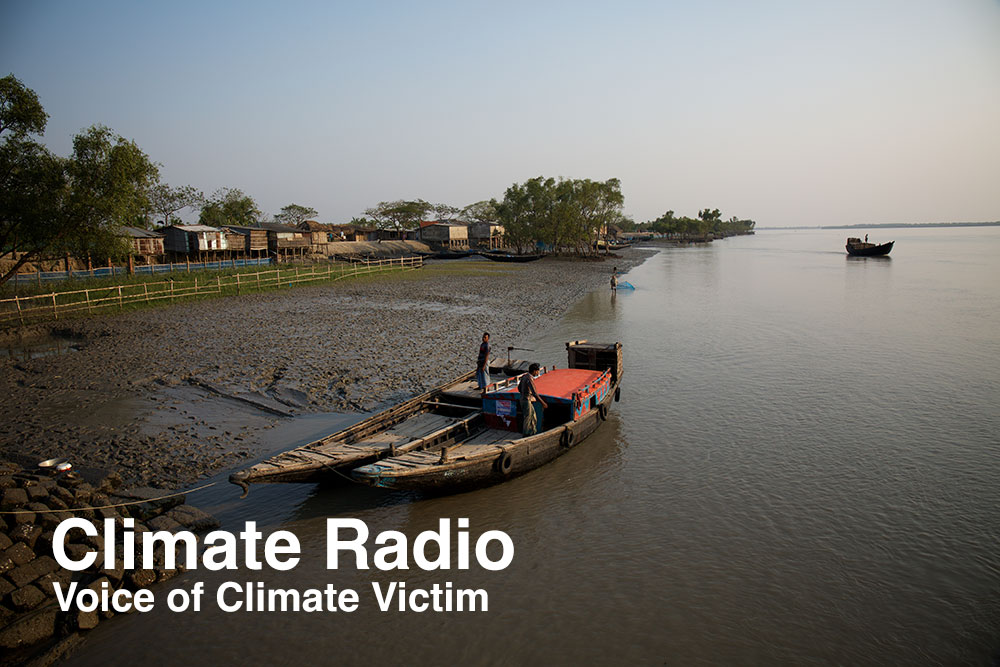
Climate Tribunal | 8th Nov, 2010 | Dhaka, Bangladesh
Duration: 7:05 min
The Campaign for Sustainable Rural Livelihood (CSRL), an alliance of local NGOs and civil society organizations, coordinated the Shadow Climate Tribunal, held on Monday, 8 November 2010, at the Bangabandhu International Conference Centre in Dhaka.
The tribunal was organized to explore legal approaches for safeguarding the rights of people affected by climate change. It concluded that climate change was largely responsible for the suffering of nature-dependent communities and held the Annex I countries (as defined under the Kyoto Protocol), the world’s major greenhouse gas emitters, responsible for their plight.
A five-member jury panel, headed by Prof. Mizanur Rahman, Chairman of the Bangladesh Human Rights Commission, heard testimonies from four climate victims representing different backgrounds, including housewives from cyclone-affected coastal areas and fishermen who had been stranded at sea and imprisoned in India after crossing maritime boundaries. The panel also heard expert opinions from specialists in climate change and international law to establish the links between climate science, national and international legal frameworks, and ongoing global climate negotiations.
After reviewing the testimonies and expert evidence, the jury recommended the enactment of a separate climate change law and the inclusion of climate change provisions in the Constitution of Bangladesh. The panel further concluded that developed countries, being primarily responsible for greenhouse gas emissions, should bear responsibility for financing climate change mitigation and adaptation efforts. It also observed that the human rights of people living in Bangladesh’s coastal regions had been violated by the impacts of climate change.
The jury panel included Members of Parliament Saber Hossain Chowdhury, Tarana Halim, Hasanul Huq Inu, and economist Dr. Quazi Kholiquzzaman Ahmad.
This version is suitable for publication on a website or in a documentary archive while maintaining the historical context and original message.